

The 50-hour training course, delivered using an adapted methodology, has enabled participants to acquire technical skills and strengthen their confidence in pursuing employment opportunities in the tourism and hospitality sectors.
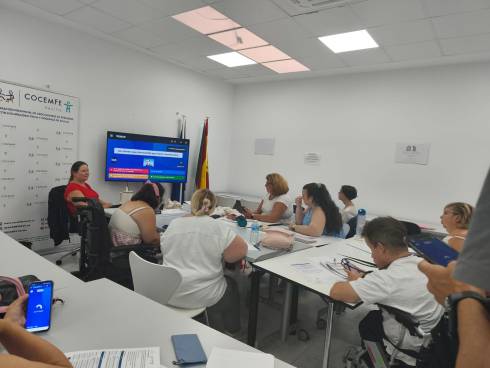
The Provincial Federation of Associations of People with Physical and Organic Disabilities of Seville, COCEMFE Sevilla, has successfully completed its inclusive Hotel Receptionist training course, delivered as part of the European Inclusive Check-In project. The initiative’s main objective is to promote the employability and labour market inclusion of people with disabilities in the hospitality and tourism sectors.
Over two weeks of learning and shared experiences, the course provided participants with job-specific knowledge and essential transferable skills, helping them develop greater independence and confidence as they prepare to face new challenges in the labour market.
The 50-hour training programme covered the main responsibilities of a hotel receptionist. Topics included customer service and communication, reservation management, telephone etiquette, email writing, handling complaints and resolving conflicts, as well as various administrative tasks.

The programme also included training in risk prevention, occupational health, safety and hygiene, together with guidance on teamwork and coordination with other hotel departments.
To consolidate this knowledge, the course adopted a practical and inclusive learning-by-doing approach. Through role-playing activities, simulations and exercises based on everyday hotel situations — such as providing guests with directions, responding to requests and managing incidents — participants were able to put their problem-solving and communication skills into practice. Learning pace, breaks, materials and support were adapted to each participant’s individual needs to ensure a safe and accessible learning environment.
Beyond providing participants with professional training, the course also played a strategic role within Inclusive Check-In, as it formed part of the pilot testing process for the methodology and training materials developed by the European initiative.
The feedback and assessments collected throughout the sessions have provided valuable first-hand insights into the accessibility, usefulness and practical applicability of the training content. In this way, participants have also played an active role in improving the educational resources that will be used in future project activities.
The Inclusive Check-In project is co-funded by the European Union’s Erasmus+ programme and aims to facilitate the integration of young people with disabilities into the tourism labour market through specialised training, adapted learning materials and a hybrid learning platform. The initiative also seeks to raise awareness among professionals in the sector of the skills and potential of people with disabilities, while promoting the creation of inclusive working environments.
Following the closing session, which highlighted the commitment and enthusiasm of the participants, COCEMFE Sevilla congratulated the trainees on their dedication and efforts and expressed its gratitude to the individuals and organisations that contributed to the successful delivery of the course.
COCEMFE Sevilla continues to work tirelessly to ensure that training aimed at promoting the employment inclusion of people with disabilities becomes a reality throughout the city and province of Seville.

